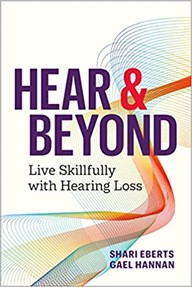
Reading someone else’s story can be a comforting way to learn and to be inspired for your own hearing loss journey. Hearing loss can feel less lonely when we can see someone walking with us in spirit.
We’re lucky to know several terrific authors who’ve written eloquently and with open hearts about what it was like to lose their hearing, how they overcame barriers, and how they thrive in the world today.
Bouton, a former New York times senior editor, lost her hearing suddenly when she was in her 30s. She shares her grief, her reluctance to tell others about it, and how she eventually received a CI. She also explores the issue of hearing loss more broadly.
Dr. Myers explains the psychology of hearing loss and also shares his own experiences as a hard-of-hearing person. Dr. Myers is also the founder of the Loop America movement to encourage hearing access.
Movie theaters across the country are slowly opening their doors again. Is the smell of freshly buttered popcorn coaxing you back to your favorite theater, or are you still Netflix-and-chilling on the couch?
You can, of course, still find many captioned shows to stream at home. But if you have a hearing loss and you’re headed back to one of Washington State’s many movie houses, here’s a guide to where (and when) you might find looped or captioned shows at a theater near you.
Something to keep in mind: Theater managers have told us that not all movies come to the theater with captions, and that even when captions are available, sometimes it can take the theater staff 24 hours or more to make an open-captioned show happen. In other words, it may help to plan ahead.
As always, if you don’t see a theater’s hearing access or captions advertised, call or email the theater and ask about their access, and request an open-captioned show if you need one.
Regal Meridian & 4DX – At Regal cinemas on 7th Avenue in Downtown Seattle, some films are closed-captioned and others are open-captioned. Check the theater website or call ahead to confirm (844-462-7342)
Regal Thornton Place – At Regal Thornton Place & Imax at Northgate, some films are closed-captioned and some are open-captioned. Check the theater website or call ahead to confirm (844-462-7342).
Seattle International Film Festival (SIFF) – In addition to the yearly festival—one of the largest in the country—SIFF also screens films year-round at the SIFF Egyptian, SIFF Uptown, and SIFF Film Center.
Foreign films at SIFF are usually shown with English subtitles (captions) at all SIFF locations and at affiliate venues during the festival. SIFF also offers assistive listening devices at all three of its locations. Closed captioning varies by film and by venue; call 206-465-5830 or email info@siff.net for more information. As of December 2021, SIFF tells us that they’re considering more open-captioned shows.
Spokane
AMC River Park Square 20– Assistive listening devices and closed captioning CaptiView devices are available for most shows. Contact the guest services desk for help.
Regal Northtown Mall – Closed captioning devices are available for most shows; some open-captioned screenings are available. Call the theater to confirm (844-462-7342).
Village Center Cinemas – These theaters in Airway Heights, Wandermere, Pullman, Lewiston, and Eastside Moscow offer some shows with closed captions.
Grand Cinema – This indie theater has open-captioned shows every Wednesday. A closed-caption device is available to put in your cupholder. To hear through their an assistive listening system (FM), you can borrow headsets or a neckloop, or bring your own (2.3 or 2.8 Mhz.)
Edmonds
The Edmonds Theater – Open-captioned screenings generally happen on Sunday afternoons.
Anacortes
Anacortes Cinema – Open captions are available upon request (360-299-7994).
Mount Vernon
Lincoln Theater – The beautiful Lincoln, built in 1926, has a hearing loop system, closed captioning gooseneck devices, and headsets. To best hear through the hearing loop, sit in the center sections.
The Lincoln Theater in Mount Vernon, Washington, has a hearing loop plus closed-captioning devices
More open-captioned shows may be on the horizon.
In late 2021, AMC Entertainment announced they plan to offer more open-captioned shows, in addition to the headsets and CaptiView closed-caption options they already offer.
And locally, we’re talking with Rep. Tina Orwall, the Washington State Department of Commerce, the Washington State Association of the Deaf, DeafFriendly’s Echo Greenlee, and cinema owners to find ways to bring more captioned shows to your neighborhood theater here in Washington State. We’ve signed a letter of support for a budget proviso to explore solutions.
Special thanks to the folks at Wash-CAP, The Washington State Communication Access Project, for their stellar work in bringing captions to Washington State. Wash-CAP is an excellent resource for finding captioned entertainment. You can also visit captionfish.com for captioned movie screenings around the country.
Did we miss any of your favorite hearing-friendly movie houses? Let us know: admin@hearingloss-wa.org.
Over the years I have written many letters to Costco executives about getting counter loops placed on the hearing aid counters at Costco stores in the USA. I want to have the hearing aid specialist’s voice come directly into my hearing aids. For that, I need to turn on my telecoil and stand in front of the counter loop. Otherwise, I have difficulty in hearing the Costco Hearing Department staff—especially withmasks, plexiglass, and warehouse background noise!
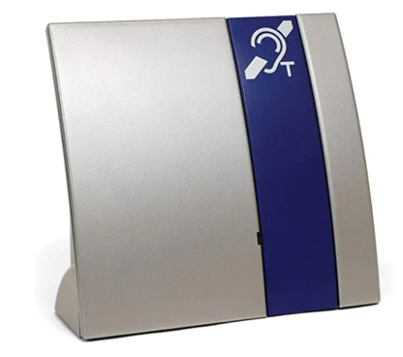
A picture of a counter loop is below. It is about the size of a piece of paper and is placed on a countertop.
A counter loop like this one would help Costco customers test the telecoils in their hearing aids.
None of my letter writing produced “action” on this issue.
However, last year I discovered that submitting a question at the January 2021 Costco Annual Meeting was far more effective than anything else I’ve done. At the 2021 online Costco Annual Meeting, in the question box, I asked why Costco hearing aid counters did not have a counter loop available.
After that meeting, I was contacted by some folks from Costco. Although they did not agree to do this throughout the USA, they were willing to send a counter loop to the Costco hearing aid managers to use at the stores I shop at: Lacey, Washington and Tumwater, Washington.
The counter loops arrived. But they’re not widely used–and not everyone knows about them.
The counter loop not only would let customers hear better, but it also would allow the hearing aid specialists to educate their customers about how a telecoil works. The voice of the hearing aid specialist goes right into the customer’s hearing aid. The specialists could use the counter loop to show customers the “ah-ha!” moment of clear sound. It would help in educating customers about telecoil and what it can do. And technology education about Bluetooth and telecoils is a legal requirement in Washington State with the passage of SB 5210.
So, I just don’t understand the Costco management’s reluctance to promote the use of the counter loops.
I need your help.
If you own at least one share of Costco stock, you may attend the Annual Meeting. Would you be willing to attend the 2022 Costco annual meeting and put a comment in the question box about this issue? If so, here are the details:
DATE/TIME: Thursday, January 20, 2022 at 2 PM PST
Instructions for accessing the Costco Annual Meeting
○ Shareholders who wish to ask questions or make comments must enter the 16-digit control number found on the Notice of Internet Availability of Proxy Materials or on the proxy card or voting instruction form provided to you with the Proxy Statement.
Your hearing loss story is invaluable. You could say anything that would encourage the management to place counter loops at Costco’s hearing aid countertops in the USA. And, hopefully the managers will actually implement and market them.
Feel free to contact me with any questions or suggestions: carolyn@odio.com.
You’ve seen the text on meeting notices many times…
For accommodations, please call our disability coordinator… Hearing accommodations available upon request Please submit your accommodation request 14 days in advance
What’s the problem with that? After all, the hearing accommodation will be there, right?
No, not always. The hearing assistive device or system may not be available, or it may not work properly. People may not remember ask for help ahead of time—or even know what a venue offers for accessibility.
“When a person with a disability has to request accommodations, a lot of factors can stop that person from asking for what they need,” said Cheri Perazzoli, HLAA-WA president and HLAA board member. “First, some people with hearing loss are reluctant to ‘out’ themselves by admitting to their hearing loss. Second, if you’re new to the world of hearing loss, you may not yet know what’s available to you to help you hear.”
Cheri added that because people are optimistic by nature, we often come to a venue expecting to be able to hear and thinking we won’t need an accommodation. But in reality, much depends on the environment and the particular speaker. “Folks with hearing loss need to approach each outing thinking about the consequences of not being able to hear. We have to assume we won’t get a front row seat, the speaker will be wearing a mask or speak with an accent, and we won’t be able to speech read. That’s why hearing accommodation needs to be there.”
When venues place the onus of the “ask” on people with hearing loss, they’re effectively forcing people to ask permission to hear. That’s not really meaningful access, says Perazzoli.
But there’s a better way: hearing loop assistive listening systems. “I’m passionate about hearing loops becoming a part of our neighborhoods—loops are always there waiting,” Perazzoli explains.
This sign in a venue means that a hearing loop is waiting for people with hearing loss.
If you have a hearing aid with a telecoil feature, you can connect directly to a hearing loop to reduce background noise and the effect of distance, so that you can hear and understand much more clearly. A hearing loop is part of a venue’s standard equipment and infrastructure—a loop doesn’t need to be requested ahead of time.
In Washington State, venues such as the Seattle Rep and the Seattle, King County, Spokane, and Bellevue councils have hearing loops. Other locations, such as the Seattle Opera and The Paramount Theater, have other assistive listening options, such as FM and infrared systems. These systems are usually available without prior arrangements, but receivers and neckloops need to be checked out onsite.
A recent Washington State law requires televisions in public spaces like bars and offices to have captions on automatically, all the time—another example of removing the burden of the ask from people with hearing loss. The captions are always there waiting.
In New York City, thanks to a push from hearing loss and Deaf advocates, cinemas will soon be required to offer daily open-captioned screenings with on-screen subtitles. Open captions are different from the closed captions that some movie theaters currently offer. Closed-caption shows require borrowing special caption glasses, or a digital device called a CaptiView. Some movie fans have been frustrated about by how poorly the closed-caption devices work, the delay in the text captions, and the distraction in looking back and forth between a device in your cupholder and the big screen.
With the new NYC open-caption law, people with hearing loss don’t need to ask for a device; rather, anyone can simply find an open-captioned show that works with their schedule, and then attend as others do.
Is the future one with fewer “asks” and a more robust infrastructure of accessibility for everyone? We sure hope so.
Elizabeth Ralston leads the Seattle Cultural Accessibility Consortium.
What would the Seattle arts community look like as a fully accessible, inclusive space? Ask the folks at the Seattle Cultural Accessibility Consortium, an organization that connects local cultural and arts groups with what they need to ensure that everyone, regardless of any disability, can enjoy and participate in arts programs and performances. We talked with Consortium founder Elizabeth Ralston about how improved accessibility is key to changing the arts community and opening doors to new audiences.
Accessibility can be a daunting, overwhelming process. How do you show venues what they need to do?
Ralston: Through our workshops and networking events where they tap the knowledge of the community for resources. I am also a consultant and work with clients on developing accessibility plans and auditing their programs and content for accessibility.
What are some of the Consortium’s key accomplishments?
Ralston: We ended the year strong with three workshops and three networking events, called Consortium Connections. We have a website with resources. A strong steering committee–we just recruited three new members. We have two seasons of a podcast called Opening Doors, which consists of interviews with people from the disability community about access, intersectionality, and art.
What’s your favorite arts venue in Seattle, and what are the key accessibility features?
Ralston: I’d like to rephrase the question to: What arts venue is succeeding in accessibility? Answer: the Sound Theatre Company. They employ actors with disabilities and are intentional about creating a rehearsal environment that works for people with disabilities who have differing needs. Their plays and shows are produced and run by people with disabilities. They have a radical inclusion ticketing policy where anyone can buy a ticket at a price that works for them and can sit where they need to sit in the theater.
What are you most excited about for the future of accessibility in Seattle?
Ralston: I feel like accessibility is really moving into the forefront of peoples’ consciousness, rather than being treated as an afterthought. The arts sector has been battered mightily by the pandemic, which exposed a lot of the inequities, and now people know they can’t go back to business as usual. Considering new audiences and markets is critical as reopening plans are underway.
Note: For more info on hearing-friendly arts venues in the Seattle area, see our list and map. Venues with a hearing loop include the Seattle Rep, Town Hall Seattle, the Federal Way Performing Arts Center, Carlson Theater at Bellevue College, the Bellevue Arts Museum, the Driftwood Players, Everett Performing Arts Center, and Village Theater Issaquah.









 letsloopseattle